
Updated: 27 July 2026 · Reviewed for clarity and usefulness
On this page
Scandinavian culture in Britain is visible in more than flat-pack furniture. It appears in calm interiors, Nordic crime dramas, cinnamon-bun cafés and conversations about balance, comfort and sustainable living. These influences have not replaced British traditions. Audiences have selected and adapted Nordic ideas to suit local tastes.
Scandinavia usually refers to Denmark, Norway and Sweden, while the wider Nordic region also includes Finland and Iceland. Each country is distinct, and no single lifestyle represents everyone. Even so, themes such as practical design, natural materials and understated storytelling have travelled successfully.
Why Scandinavian ideas appealed to Britain
Britain and the Nordic countries are connected through trade, travel, migration and cultural exchange. Their climates also create familiar practical concerns: limited winter daylight, changeable weather and the need for comfortable indoor spaces. That does not make the cultures identical, but it helps explain why some Nordic approaches feel relevant in the UK.
Furniture, television imports, travel and cookbooks have made these ideas accessible. The result is usually a British interpretation rather than a direct copy of Scandinavian life.
Scandinavian design in British homes
Practicality before decoration
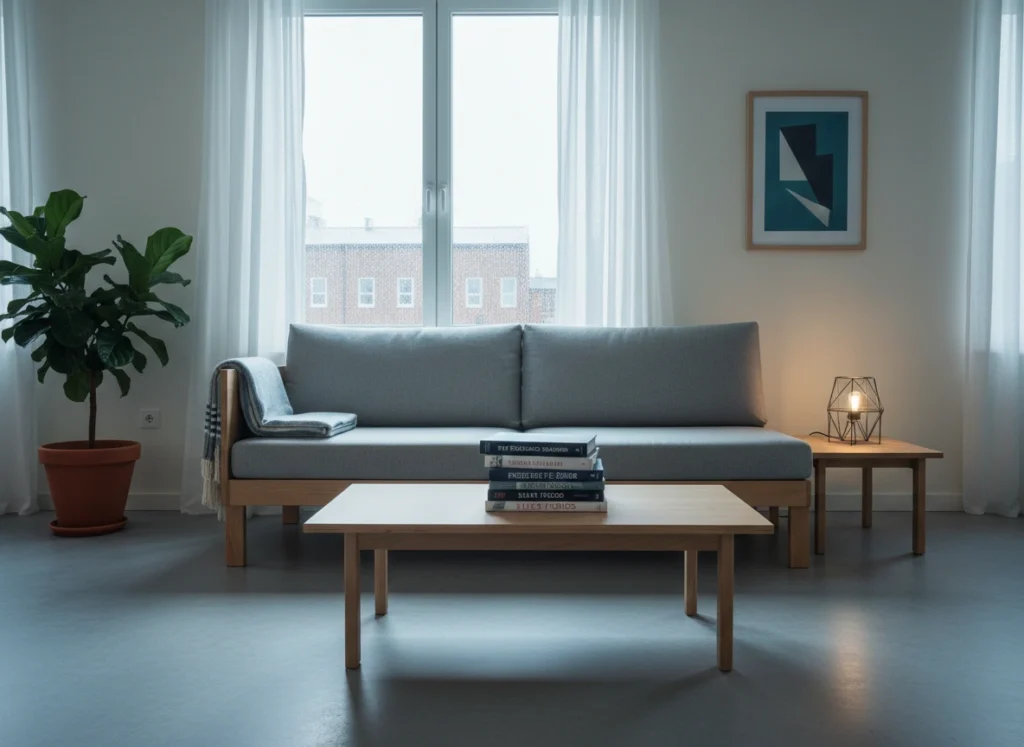
A clear influence is the preference for useful objects with simple forms. In British homes, flexible furniture and efficient storage matter because space may be limited. Scandinavian-inspired design often suits that need by giving each object an obvious purpose.
This does not require an entirely minimal room. Books, inherited furniture and personal collections can sit beside Nordic principles. The useful lesson is to consider movement, light and function before adding decoration.
Light, colour and natural texture
Pale walls, light timber and restrained palettes are often associated with Scandinavian interiors. In Britain, these choices can make better use of weak winter light. Wool, linen, wood and ceramics add warmth so a room does not feel clinical.
Scandinavian design is not limited to white and beige. Nordic designers also use bold textiles and playful shapes. British interiors increasingly reflect this broader view, pairing practical foundations with colourful art or vintage pieces.
Buying less and choosing carefully
A thoughtful interpretation prioritises longevity over constant replacement. Repairable furniture and second-hand finds can support that aim. A Scandinavian-looking product is not automatically sustainable; materials, transport and useful life still matter.
Nordic noir and British entertainment
Nordic noir introduced many British audiences to restrained crime storytelling, morally complicated characters, social themes and landscapes that shape the atmosphere. The label is broad, but the pace is often patient enough for tension to develop through character and place.
Britain already had a strong crime tradition, so Nordic noir expanded rather than created local interest. Its success showed that viewers were open to subtitled drama and helped popularise bleak settings, flawed investigators and community themes. These features are not exclusive to Scandinavia, and direct influence should not be assumed in every British production.
Food culture beyond stereotypes
Baking, coffee and everyday pauses
Cinnamon buns, cardamom pastries, rye breads and open sandwiches are familiar in many British towns. Their appeal fits alongside the UK’s established café and baking culture. Nordic-inspired cafés have added flavours rather than replaced tea and traditional cakes.
The Swedish idea of fika is commonly presented as a coffee-and-cake break. Its wider meaning depends on context, but British interest usually centres on pausing and connecting with others. It is better treated as inspiration than as a rigid productivity technique.
Seasonal ingredients
Nordic cooking is often associated with fish, berries, root vegetables, grains and preserving. British cooks may recognise parallels with local seasonal traditions. Not every Nordic dish is environmentally preferable, especially when ingredients travel far. The transferable principle is to consider season, waste and full use of ingredients.
Work, wellbeing and everyday language
Words such as hygge and lagom have become shorthand in British lifestyle coverage. Hygge is often linked with comfort and sociability, while lagom is commonly described as seeking balance or having enough. These definitions simplify cultural ideas, yet they help people discuss ordinary routines.
At home, that might mean sharing an unhurried meal or improving a reading corner. At work, it may prompt discussion of realistic workloads and boundaries. Nordic countries have different laws and social systems, so their practices cannot simply be transplanted to Britain. Employers must follow UK requirements and listen to their teams rather than rely on lifestyle slogans.
The constructive lesson is modest: build routines people can maintain. Comfort and balance are not products, and neither requires a perfectly styled home.
Sustainability and the Nordic influence
Scandinavian countries are often associated with cycling, efficient buildings and public transport. Performance varies by country and sector, and Nordic consumption still has an environmental footprint. It is more accurate to discuss particular ideas than to call the whole region uniformly sustainable.
In Britain, related interests include durable products, home efficiency, walkable neighbourhoods and outdoor space. Individuals cannot solve structural problems alone, but maintaining furniture, reducing food waste and using active or public transport where feasible may help.
Home upgrades should suit the property and follow current UK guidance. Renters, listed-building owners and households with limited budgets face different constraints, which responsible advice should recognise.
How to use Scandinavian inspiration thoughtfully
- Start with a need: improve storage, lighting or comfort before buying decoration.
- Mix old and new: keep useful family or second-hand pieces.
- Choose durable materials: check construction and repair options, not only appearance.
- Explore original work: seek books, films, food and design from varied Nordic voices.
- Avoid slogans: recognise differences between countries and communities.
- Adapt locally: choose UK ingredients and solutions suitable for British homes and rules.
The strongest British interpretations take a useful principle, test it against local needs and leave room for personality.
The continuing relationship
Scandinavian culture in Britain keeps changing because it is supported by habits as well as fashion. Practical rooms, compelling stories, convivial food and manageable routines can improve daily experience. Audiences are also becoming more alert to oversimplified ideas of Nordic perfection.
Britain can appreciate Scandinavian concepts while acknowledging their origins, limits and variety. A calm room, thoughtful drama or shared coffee break may carry Nordic influence, but it becomes meaningful through the way people use it.
Frequently asked questions
What does Scandinavian culture mean?
It refers principally to traditions and contemporary life in Denmark, Norway and Sweden. The wider term Nordic also includes Finland and Iceland. Each country and community is distinct.
How has Scandinavian design influenced British homes?
Its influence is visible in practical layouts, simple furniture, natural textures and attention to light. British homes often combine these ideas with older architecture and personal possessions.
Is hygge just an interior design style?
No. It is more usefully understood as an idea connected with comfort and sociable experiences. Buying particular products is not a requirement.
Why is Nordic noir popular in the UK?
Many viewers enjoy its atmosphere, patient pacing, complex characters and social themes. It complements Britain’s long interest in crime fiction while offering different settings and traditions.
Is Scandinavian-inspired living automatically sustainable?
No. Appearance alone says little about environmental impact. Durability, repairability, materials, transport, energy use and actual need are more meaningful considerations.