

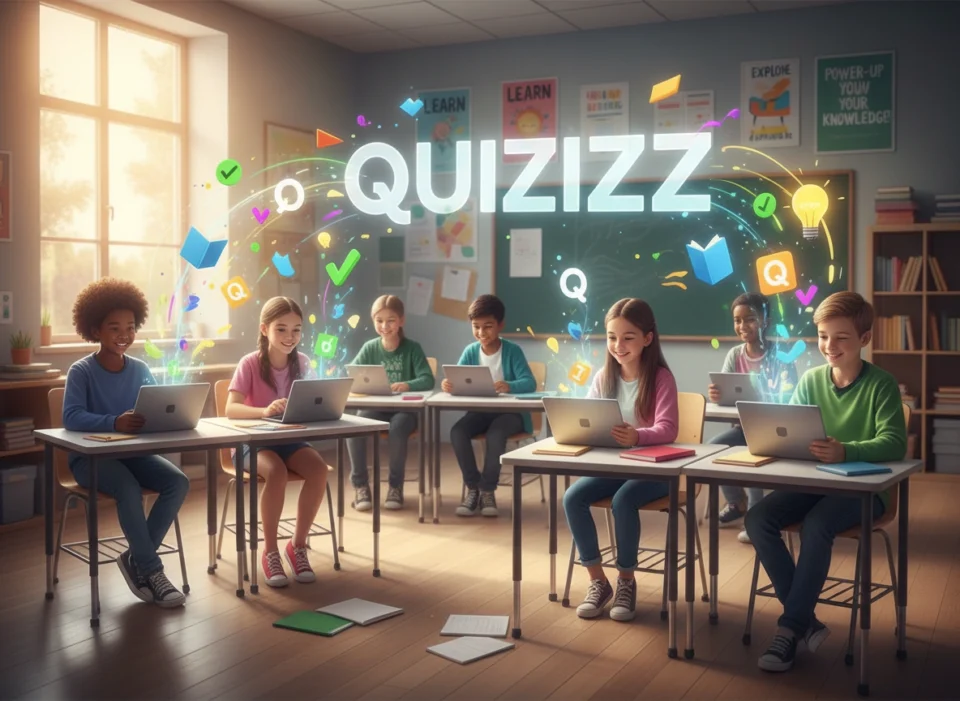
Educators constantly search for tools that do more than just deliver content. The real challenge in modern classrooms isn’t access to information—it’s retention. How do we ensure that a lesson taught on Monday is still remembered on Friday, or better yet, applied during a final exam months later?
Quizizz has emerged as a powerful answer to this question. While it is widely known for its fun, game-show-style interface, the platform is built on solid pedagogical principles that directly support memory retention. By leveraging gamification, providing immediate feedback, and offering adaptable learning paths, Quizizz transforms passive review into active recall.
This article explores exactly how Quizizz enhances student memory, turning fleeting classroom moments into lasting knowledge.
The Power of Gamification in Learning
Gamification is often misunderstood as merely making learning “fun.” While engagement is a crucial component, the true power of gamification lies in how it stimulates the brain’s reward system. Quizizz uses these mechanics to create an environment where the brain is primed to remember.
Dopamine and Motivation
When students answer a question correctly on Quizizz, they receive instant validation through points, memes, or leaderboard climbing. This triggers a release of dopamine, a neurotransmitter associated with pleasure and motivation. Dopamine doesn’t just make the student feel good; it signals the brain that the information processed is important and worth storing.
In a traditional lecture setting, this chemical reinforcement is rare. On Quizizz, it happens repeatedly within a single session. This cycle of challenge-achievement-reward keeps students focused, and heightened focus is the first prerequisite for encoding memories.
Reducing Anxiety to Improve Recall
High-stress environments, such as high-stakes testing, can cause the brain to release cortisol, which inhibits the hippocampus—the area of the brain responsible for memory formation. Quizizz counters this by creating a low-stakes, high-engagement atmosphere.
The “memes” feature, which shows funny images after questions, serves a dual purpose. It provides a brief cognitive break and lowers tension. When students are relaxed and enjoying the process, their brains are more receptive to new information and better at retrieving stored data. The platform allows students to fail safely, treating errors as part of the game rather than a final judgment on their intelligence.
Active Recall and Spaced Repetition
Cognitive science tells us that two of the most effective study techniques are active recall and spaced repetition. Quizizz is designed to facilitate both of these methods effortlessly.
Moving Beyond Passive Review
Many students study by re-reading notes or highlighting textbooks. This is known as passive review, and it is notoriously ineffective for long-term retention. Quizizz forces students into active recall. When a question appears on the screen, the student must retrieve the answer from their memory banks without looking at their notes.
This act of retrieval strengthens the neural pathways associated with that specific piece of information. Every time a student plays a Quizizz game, they are essentially performing “mental push-ups,” making the memory stronger and easier to access next time.
Implementing Spaced Repetition
Teachers can use Quizizz to assign the same quiz (or variations of it) over spaced intervals—a day later, a week later, and a month later. The platform’s “Homework” mode makes this seamless.
By revisiting material just as they are about to forget it, students interrupt the “forgetting curve.” This spacing effect cements knowledge into long-term memory far more effectively than “cramming” sessions. The platform’s detailed reports allow teachers to see exactly which concepts are fading over time, enabling targeted re-teaching before the information is lost completely.
The Critical Role of Instant Feedback
In a traditional classroom assignment, a student might complete a worksheet and not receive graded feedback for days. By the time they see their mistakes, the learning moment has passed, and the misconception may have already taken root.
Correcting Misconceptions immediately
Quizizz provides immediate feedback. As soon as a student selects an answer, they know if they were right or wrong. If they were wrong, the correct answer is displayed instantly.
This immediacy is crucial for retention. It prevents the brain from encoding incorrect information. When a student makes a mistake, the “correction” happens while the question is still fresh in their working memory. They can immediately compare their thought process with the correct logic. This real-time course correction ensures that what is retained is accurate.
Explanations for Deeper Understanding
Beyond just showing the right answer, Quizizz allows teachers to add answer explanations. When a student gets a question wrong, a brief text or image can explain why the answer was incorrect.
This feature turns a testing tool into a teaching tool. Students aren’t just memorizing A, B, C, or D; they are engaging with the reasoning behind the facts. Understanding the “why” creates deeper cognitive connections, making the information stickier and easier to recall later.
Adaptability to Different Learning Styles and Paces
One of the biggest barriers to retention in a classroom is the “one-size-fits-all” pace. If a teacher moves too fast, students get lost. If they move too slow, students tune out. Quizizz addresses this through its student-paced design.
Student-Paced Mode
Unlike front-of-class presentations where everyone must answer at the same time, Quizizz allows students to answer questions on their own devices at their own speed.
This is vital for retention because it gives students the processing time they need. A student who needs 30 seconds to recall a fact isn’t penalized or rushed by a peer who remembers it in 5 seconds. This autonomy reduces cognitive load, allowing the student to focus entirely on the material rather than the pressure of the clock or their peers.
Visual and Auditory Reinforcement
Memory is often multisensory. Some students retain information better when they see it; others need to hear it. Quizizz supports rich media integration. Teachers can embed images, audio clips, and videos directly into questions.
For example, a foreign language teacher can include audio clips for pronunciation, or a history teacher can include primary source images. By engaging multiple senses, the platform creates more “hooks” for the memory to latch onto. A student might not remember the text of the question, but they might recall the image associated with the correct answer, which triggers the retrieval of the concept.
Data-Driven Review for Targeted Retention
Retention isn’t just about the initial learning phase; it’s about identifying gaps and filling them. Quizizz offers robust analytics that empower both teachers and students to take ownership of what they don’t know.
The Redemption Question Feature
One unique feature of Quizizz is the “Redemption Question.” Toward the end of a quiz, students are often given the chance to re-answer a question they previously got wrong.
This is a brilliant application of retention psychology. It forces the student to immediately apply the feedback they received earlier in the session. Successfully answering a “Redemption Question” overwrites the memory of the failure with a memory of success, reinforcing the correct information right before the session ends.
Insightful Reports for Educators
After a session, Quizizz generates a report that highlights the “toughest question” (the one most students got wrong) and offers a class-level overview of performance.
This data allows teachers to perform immediate intervention. Instead of moving on to the next unit while half the class is confused, a teacher can see exactly where retention failed. They can say, “I see 60% of you missed the question on photosynthesis. Let’s review that diagram again right now.” This targeted review prevents knowledge gaps from widening over time.
Conclusion
Quizizz is often celebrated for its ability to engage students, but its value runs much deeper than entertainment. It is a robust platform that systematically addresses the biological and psychological requirements for memory retention.
By utilizing active recall, providing instant feedback, allowing for self-paced processing, and lowering the emotional stakes of failure, Quizizz creates an optimal environment for the brain to learn. It transforms the classroom from a place of passive listening into an arena of active, reinforced, and durable learning. For educators looking to ensure their lessons last a lifetime, Quizizz is an essential tool in the modern pedagogical toolkit.
Please vist this website for more info
