
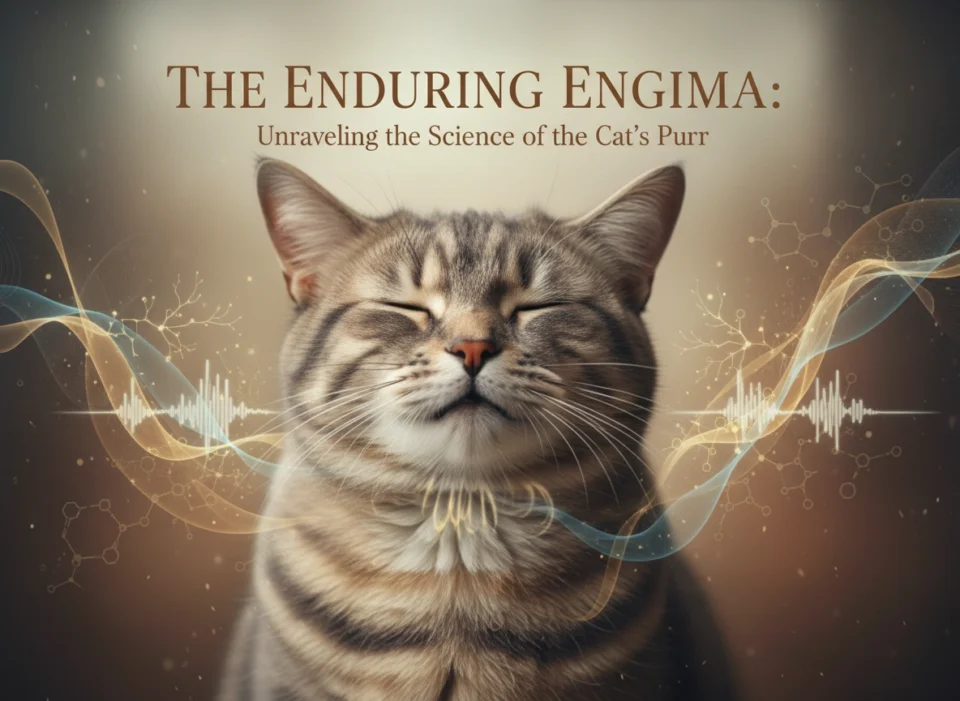
The soft, rhythmic rumble of a cat’s purr is one of the most comforting sounds in the animal kingdom. For generations, we have associated it with contentment—a sign that our feline companions are happy, relaxed, and at peace. While this is often true, the science behind this unique vocalization reveals a far more complex and fascinating story. The purr is not just a simple expression of joy; it is a sophisticated tool for communication, a mechanism for self-healing, and a powerful coping strategy.
Exploring the science behind the purr takes us deep into feline anatomy, neurology, and behavior. It’s a sound that begins when a kitten is just a few days old and continues throughout its life, adapting its meaning and purpose to fit a variety of situations. From the cozy warmth of a lap to the sterile environment of a veterinarian’s office, the purr serves as a multi-functional signal. This article will delve into the biological mechanics of purring, explore its diverse applications, and uncover the profound benefits it offers to cats, both physically and emotionally.
The Mechanics: How Do Cats Create the Purr?
For years, the exact physical mechanism of purring was a subject of debate among scientists. Early theories suggested it was related to blood flow in major veins, but modern research points to a more intricate process originating in the brain and executed by the larynx, or voice box.
The process begins with a neural oscillator in the cat’s brain, which sends rhythmic signals to the laryngeal muscles. These signals cause the muscles surrounding the glottis—the opening between the vocal cords—to vibrate rapidly. As the cat inhales and exhales, air passes through these vibrating muscles, creating the continuous, low-frequency sound we recognize as a purr.
What makes the purr so unique is its consistency during both inspiration and expiration. Unlike most other vocalizations, which occur only during exhalation, the purr is produced in a steady stream as the cat breathes in and out. This is possible because the laryngeal muscles can contract and relax with incredible speed, between 25 and 150 times per second (25-150 Hertz). This remarkable control allows for the sustained, resonant hum that can be both heard and felt. The ability to purr is not limited to domestic cats; several other members of the Felidae family, including bobcats, cheetahs, and pumas, also possess this unique vocalization.
Beyond Contentment: The Many Meanings of a Purr
While a cat purring on your lap is a classic image of happiness, the reality is that cats purr in a wide array of contexts, many of which have nothing to do with pleasure. The purr is a versatile communication tool used to convey different needs and emotional states.
Communication with Kittens: The purr is one of the first forms of communication between a mother cat and her kittens. Since kittens are born blind and deaf, the vibrations of their mother’s purr are a crucial guide. It helps them locate her for nursing and warmth. In turn, kittens begin to purr within a few days, signaling to their mother that they are healthy and content. This early-life purring establishes a vital bond and ensures their survival.
Soliciting Care and Attention: Cats are intelligent creatures that have learned how to interact with their human companions effectively. Research has shown that cats can embed a high-frequency cry, similar in range to a human baby’s cry, within their otherwise low-pitched purr. This “solicitation purr” is more urgent and less pleasant to the human ear, making it difficult to ignore. It’s a clever tactic to signal a specific need, such as hunger, without resorting to more overt vocalizations like meowing. Essentially, they have learned to manipulate their purr to get what they want.
A Sign of Anxiety or Pain: Perhaps the most surprising context for purring is during times of stress, fear, or pain. Cats are often observed purring at the veterinarian’s office, while recovering from an injury, or even during the final moments of life. In these situations, the purr is not an expression of happiness but a self-soothing mechanism. Much like a person might hum or whistle to calm their nerves in a stressful situation, a cat uses its purr to regulate its emotions and cope with distress. It’s a way for the cat to reassure itself and potentially signal non-aggression to a perceived threat.
The Healing Power: Purring as a Biological Superpower
One of the most extraordinary aspects of the cat’s purr is its potential role in physical healing. The specific frequencies at which cats purr—primarily between 25 and 150 Hz—coincide with vibrational frequencies that have been shown in scientific studies to have therapeutic effects on bone and tissue.
This has led to a compelling theory known as “bone-healing by vibration.” Feline experts and researchers, including Dr. Elizabeth von Muggenthaler, have explored this phenomenon. The idea is that the low-frequency vibrations of the purr stimulate the body at a cellular level. Studies on vibrational therapy in humans have demonstrated several key benefits that align with the frequencies of a cat’s purr:
- Bone Growth and Repair: Frequencies between 25 and 50 Hz are best for stimulating bone growth and healing fractures. Cats are famously resilient and tend to have fewer orthopedic complications than dogs, leading to the old adage that “a cat has nine lives.” Their innate ability to produce these therapeutic vibrations may contribute to their remarkable recovery from falls and other injuries.
- Pain Relief and Swelling Reduction: Vibrations can act as a natural analgesic, providing pain relief. The purr may help a cat manage the discomfort of an injury. Frequencies around 100 Hz have been associated with reduced swelling and inflammation.
- Wound and Muscle Healing: The purr’s vibrations can also promote the healing of soft tissues, including muscles, tendons, and ligaments. This provides a clear advantage for an animal that relies on agility and speed for survival.
From an evolutionary standpoint, this self-healing mechanism makes perfect sense. A cat’s life as a predator involves bursts of intense energy followed by long periods of rest. The purr may function as a low-energy way to stimulate muscles and bones during these rest periods, preventing bone density loss and keeping the body in prime condition without expending significant calories. It’s a built-in form of physical therapy.
A Symphony of Survival and Connection
The cat’s purr is a testament to the elegant efficiency of evolution. It is a complex and powerful tool that serves multiple critical functions, from the most tender moments of bonding to the most stressful situations of pain and fear. It is a form of communication, a method of self-soothing, and a remarkable biological mechanism for healing and maintaining physical health.
Far from being a simple indicator of happiness, the purr represents a cat’s internal state with incredible nuance. It’s a signal to its mother, a plea to its human provider, a comfort in times of distress, and a source of cellular repair. The next time you feel that gentle, rhythmic vibration against your hand, you can appreciate it not just as a sign of affection, but as a window into the sophisticated and resilient nature of these incredible animals. It is a quiet symphony of survival, connection, and biological ingenuity that continues to captivate and inspire us.Please visit website for more info.
You may also read: Top 10 Unique Dog Names to Strengthen Your Bond with Your Pet
