
Updated: 27 July 2026 · Reviewed for clarity and usefulness
On this page
Navigating the immigration system often feels like an overwhelming task filled with endless forms, strict deadlines, and complex legal requirements. Every piece of paperwork submitted plays a critical role in determining the success of an application. Among this mountain of paperwork, few documents carry as much weight as a person’s original birth certificate. It serves as the foundational proof of your identity, your age, and your origins.
When you apply for a visa, permanent residency, or citizenship in a country that speaks a different language than your home country, providing the original document is simply not enough. Immigration authorities require a clear, precise, and certified translation of your vital records to process your application. Without it, your entire case can come to a grinding halt.
Understanding the specific requirements surrounding document translation can save applicants from unnecessary stress, costly delays, and potential denials. Knowing what immigration officers look for and why they demand such high standards helps applicants prepare their portfolios correctly from the start.
This guide explores the vital role of translating your birth records during the immigration process. You will learn about the strict legal standards required by government agencies, the common hurdles applicants face, and how utilizing professional services can ensure a smooth, successful journey to your new home.
Why Immigration Authorities Require Certified Translations
Government agencies handling immigration, such as the United States Citizenship and Immigration Services (USCIS), process millions of applications every year. They need standardized, reliable ways to verify the information provided by each applicant.
Verifying Identity and Background
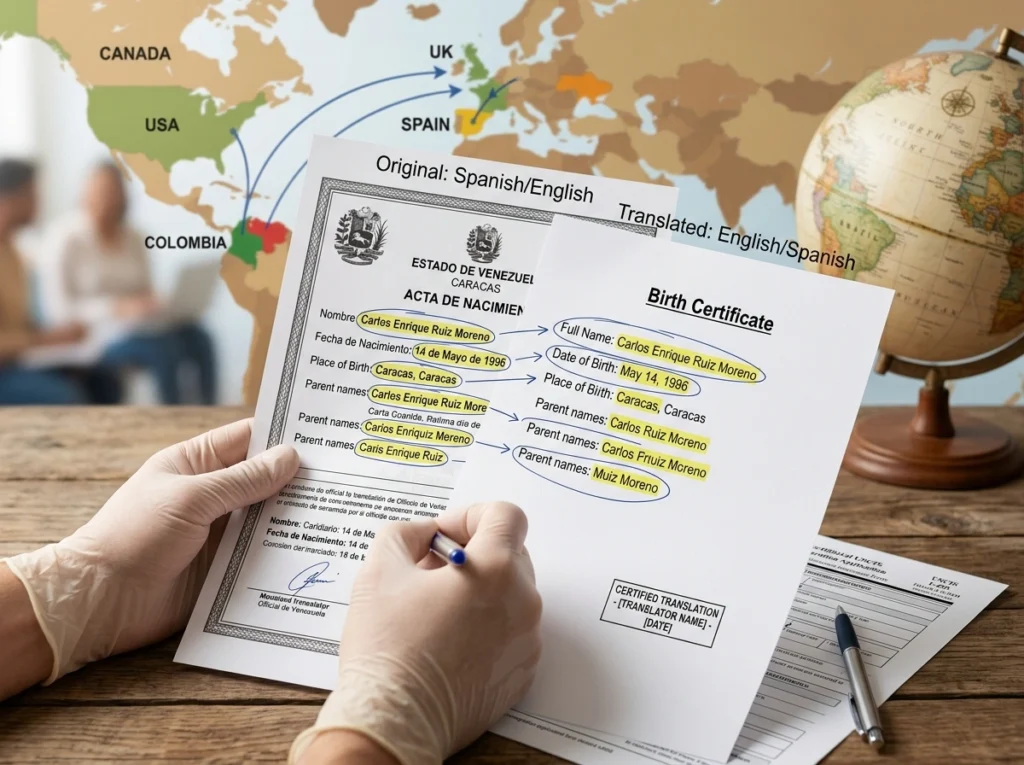
The primary function of a birth certificate is to establish a person’s true identity. Immigration officers must verify your full legal name, date of birth, and place of birth to conduct proper background checks. A certified translation ensures that the English version of the document accurately reflects the original foreign language text. If an officer cannot read the original language, they rely entirely on the translated document to confirm that you are exactly who you claim to be.
Establishing Family Relationships
Immigration processes frequently involve family sponsorships. Spouses, parents, and children often apply for visas based on their relationship to a citizen or permanent resident. The birth certificate is the primary piece of evidence used to establish parental and child relationships. A precise translation accurately details the names of the applicant’s parents, ensuring the family lineage is clear and legally recognized by the reviewing agency.
Legal and Regulatory Standards for Document Translation
Immigration authorities do not accept simple, informal translations done by bilingual friends or family members. They enforce strict regulatory standards to maintain the integrity of the immigration system.
Meeting USCIS Requirements
In the United States, USCIS requires that any document containing foreign language submitted to the agency must be accompanied by a full English translation. The translator must provide a formal statement declaring that the translation is complete and accurate. Furthermore, the translator must certify that they are competent to translate from the foreign language into English. Failing to meet these exact specifications usually results in an immediate Request for Evidence (RFE), which significantly delays the processing time of the application.
The Role of Certificates of Accuracy
A Certificate of Accuracy is a formal document signed by the translator or the translation agency. It acts as a guarantee that the translated text is a faithful representation of the original document. This certification provides immigration officials with a layer of accountability. Some specific immigration situations, court cases, or university admissions may also require this certification to be notarized. The notarization confirms the identity of the person signing the certificate, adding an extra level of legal validity to the paperwork.
Common Challenges in the Translation Process
Translating official government documents from around the world is a complex task. Birth certificates vary wildly from one country to the next, presenting unique challenges for translators.
Deciphering Complex Handwriting
Many older birth certificates, and even some modern ones from certain regions, contain handwritten information. This handwriting can be cursive, faded, or written in outdated scripts that are incredibly difficult to decipher. A slight misinterpretation of a handwritten name or date can create major discrepancies in an immigration file. Translators must possess the expertise to carefully analyze and accurately transcribe these challenging handwritten sections before translating them.
Navigating Formatting and Layout Constraints
A certified translation should ideally mirror the visual layout of the original document as closely as possible. Birth certificates often feature intricate tables, official government stamps, watermarks, and marginal notes. Translators must meticulously format the translated document so that an immigration officer can easily compare it side-by-side with the original. Properly translating the text inside official seals and stamps is often mandatory, requiring a keen eye for detail.
The Importance of Accuracy and Certification
When dealing with government bureaucracy, precision is mandatory. A minor spelling error or a missing date can have cascading effects on an individual’s immigration status.
Preventing Costly Delays
Immigration applications already take months, or even years, to process. If an agency issues a Request for Evidence due to a flawed or uncertified translation, the applicant’s file goes to the back of the queue. The applicant must then spend additional time and money procuring a new, corrected translation. Ensuring the document is translated accurately and certified properly the very first time helps applicants avoid these frustrating and expensive roadblocks.
Ensuring Global Acceptance
While USCIS is the primary authority in the United States, applicants often need their translated documents for other official purposes. They might need to register for schools, apply for a driver’s license, or secure a marriage license. A highly accurate, certified translation provided by a reputable agency is universally accepted by local, state, and federal entities, as well as educational institutions.
How Professional Translation Services Streamline Immigration
Given the high stakes involved, attempting to cut corners on document translation is a risky strategy. Professional translation services offer specialized expertise tailored specifically for the rigorous demands of immigration authorities.
Agencies that specialize in this field utilize native speakers and certified professionals who understand the specific legal terminology required by agencies like USCIS. They know how to format documents correctly, handle illegible handwriting, and properly translate official seals. Many professional agencies offer expedited processing, ensuring that tight submission deadlines are met without sacrificing quality.
Furthermore, reputable services provide a comprehensive package that includes the mandatory Certificate of Accuracy. Some even offer additional features like notarization or apostille services for documents that will be used internationally. A properly prepared birth certificate translation can help the receiving authority verify the information, but it does not guarantee an application outcome. You gain the peace of mind knowing that professionals have meticulously handled one of the most critical aspects of your paperwork.
Securing Your Immigration Journey
Immigration is a life-changing event that requires careful planning and flawless execution of administrative tasks. Your birth certificate is the foundation of your legal identity, so translate it accurately whenever the relevant authority requires a translation.
By understanding the strict standards enforced by immigration authorities, you can avoid common pitfalls that delay applications. Relying on certified, professional translators ensures your documents are accurate, legally compliant, and ready for official review. Take the time to secure a high-quality translation for your vital records today, and take a confident step forward in your immigration journey.
This article provides general information, not legal or immigration advice. Rules can change and may differ by visa route, destination and issuing country. Always follow the current instructions from the relevant authority or a regulated adviser.