
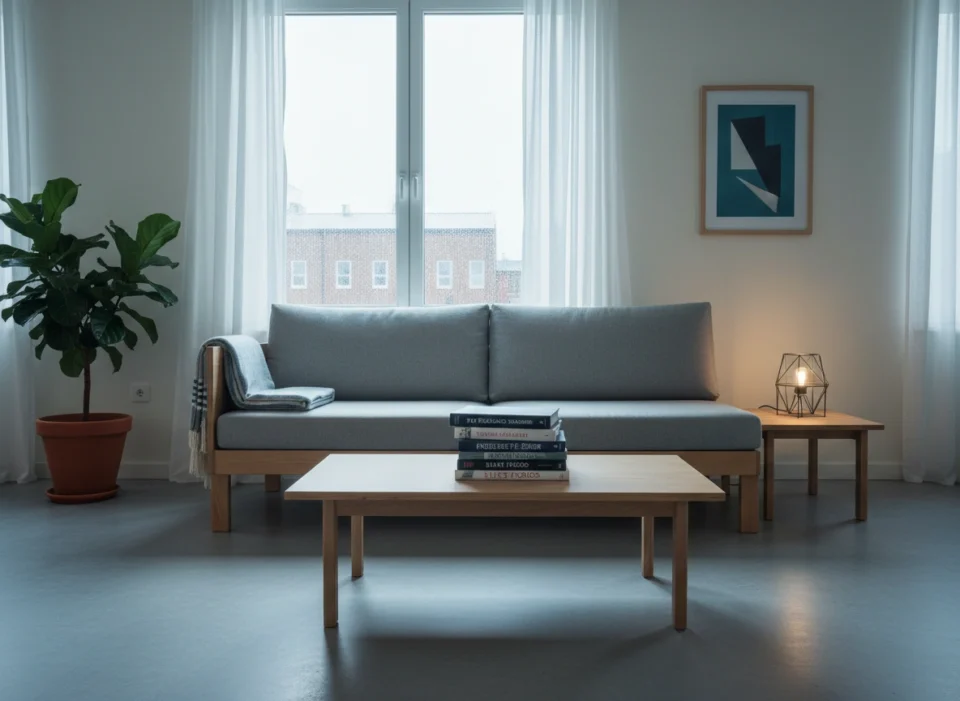
Scandinavian culture has been quietly reshaping British life for decades, often slipping in under the radar before suddenly feeling indispensable. What began in the twentieth century as a trickle of imports — practical furniture, children’s toys, the occasional television personality — has become a broad and enduring influence on how Britons furnish their homes, tell stories, and even think about everyday comfort.
Some of these influences have embedded themselves so deeply that it is hard to imagine life without them. Others remain distinctly foreign, admired from afar but unlikely ever to feel fully at home on British soil.
The First Wave: Practicality and Personality
For many people in the UK, their first encounter with Scandinavian culture came through IKEA. Long before “Scandi design” became a marketing phrase, IKEA was quietly teaching British households that furniture could be affordable, functional and aesthetically restrained. The flat-pack concept suited post-war Britain perfectly: smaller homes, tighter budgets, and a growing appetite for modern living.
At roughly the same time, LEGO was becoming a fixture in British childhoods. Its Danish origins were rarely foregrounded, but its philosophy was unmistakably Nordic: simplicity, creativity, and open-ended play. Generations grew up clicking bricks together without ever realising they were engaging with a Scandinavian export as influential as any piece of literature or television.
Culturally, figures like Sandi Toksvig also played an important role. Arriving in the UK as a performer and writer, she brought with her a distinctly Nordic sensibility — dry, precise, quietly subversive — that sat comfortably within British humour while also feeling slightly different. Over time, Toksvig became part of the national fabric, a reminder that cultural exchange does not always arrive with a flag attached.
The Rise of the Nordic Mood
If the early Scandinavian imports were practical, the twenty-first century wave has been atmospheric. Few cultural movements have landed in Britain as decisively as Scandi crime drama. Series like The Killing, Borgen and The Bridge introduced British audiences to a darker, slower form of storytelling — morally complex, visually restrained, and deeply concerned with social structures.
These shows didn’t just entertain; they influenced how British television approached crime, politics and pacing. Muted colour palettes, long silences, and characters who looked convincingly tired became virtues rather than risks. Nordic noir proved that subtlety could travel.
Alongside this came hygge, a concept so loosely defined that it almost invited misinterpretation. Often reduced to candles and wool blankets, hygge in its original sense is more about social warmth, modesty and everyday contentment. Its popularity in the UK revealed a hunger for comfort that felt intentional rather than indulgent — a quiet antidote to busyness.
New Habits, New Influences
More recently, Scandinavian habits have begun to influence British behaviour in less visible ways. One example is the rise of nicotine pouches, which originated in Nordic countries and reflect a different approach to nicotine use: smokeless, discreet, and integrated into daily routines rather than framed as rebellion.
Like many Scandinavian exports, their appeal lies in pragmatism. They don’t announce themselves. They solve a specific problem. Whether or not they become a lasting part of British culture remains to be seen, but their presence reflects a broader pattern: Scandinavian ideas often enter the UK quietly, through utility rather than spectacle.
Meanwhile, the Nordic past has been reimagined for global audiences through Viking-themed films and television. Series like Vikings and The Last Kingdom (despite its Anglo-Saxon focus) have fuelled a fascination with Norse mythology, aesthetics and moral codes. These depictions are stylised and romanticised, but they continue a long tradition of Britain engaging with Scandinavian history as something both familiar and exotic.
What Won’t Translate
Not everything travels well. Some Scandinavian traditions remain stubbornly resistant to British adoption, no matter how much cultural exchange deepens. Lutefisk, the gelatinous preserved fish dish associated with Norway, is a frequent example. Revered by some, endured by others, it has yet to find a receptive audience in the UK — and may never do so.
This selective adoption is part of the process. Cultures borrow what fits, adapt what can be adapted, and politely decline the rest.
A Quiet, Enduring Influence
What makes Scandinavian culture in the UK distinctive is not how loudly it announces itself, but how thoroughly it embeds. From flat-pack furniture and plastic bricks to political dramas and lifestyle philosophies, Nordic ideas tend to integrate rather than dominate.
They appeal to British sensibilities precisely because they are understated. They prioritise function, restraint and atmosphere over spectacle. And when they succeed, they stop feeling foreign altogether.
The result is a cultural relationship that continues to evolve — not through grand gestures, but through small, thoughtful imports that gradually become part of everyday life.
