
Updated: 27 July 2026 · Reviewed for clarity and usefulness
On this page
Choosing a safari lodge is not simply a matter of finding the most dramatic photographs. Location, guiding, journey time, daily schedule and what the price includes can shape the experience more than the style of the bedroom. The best choice is the lodge that fits your interests, mobility, budget and comfort expectations.
This practical guide explains how to choose a safari lodge from the UK without promoting a particular operator. Conditions, entry rules and local advice can change, so confirm important details with current official sources and the lodge before booking.
Start with the experience you want
Write down your priorities before comparing properties. Some travellers want long wildlife drives and expert interpretation, while others value privacy, family activities, photography or a slower holiday with occasional viewing. A honeymoon, a first family safari and a specialist birding trip require different facilities.
Ask how a typical day works. Early starts and evening drives are common in some destinations, but schedules vary. Find out whether activities are shared, how many guests use each vehicle and whether private guiding can be arranged. If an advertised activity is essential, confirm that it is available during your dates and suitable for your party.
Understand the location
National park, reserve or conservancy
A lodge may sit inside a national park, on a private reserve, in a conservancy or beyond a protected area’s boundary. Each arrangement can affect access times, vehicle rules, visitor numbers and permitted activities. No model is automatically better. Ask where most viewing takes place and how long it takes to reach it.
Season and habitat
Wildlife is not staged, and sightings can never be guaranteed. Rainfall, vegetation, water and animal movement influence what visitors may see. Ask the lodge what the season normally means for road conditions, temperature, insects and general viewing rather than relying on a single promotional photograph.
Consider the wider itinerary. A remote lodge can be rewarding but may require a light-aircraft flight or a long road transfer. Include transfer time, luggage restrictions and the risk of delays when judging whether a short stay is practical.
Assess guiding and wildlife practices
A skilled guide can explain behaviour, tracks, plants and conservation context rather than simply locating animals. Ask how guides are trained, whether they have relevant local qualifications and how the lodge allocates guides to guests with different interests.
Responsible viewing should avoid crowding, chasing or disturbing wildlife. Ask about vehicle limits, off-road driving rules, distance from animals and policies around sensitive sightings. If walking, boating or night activities are offered, request a clear explanation of supervision, age limits and safety procedures.
Photography enthusiasts should ask about vehicle layout, charging facilities and whether beanbags or supports are supplied. Avoid assuming that a “photographic safari” includes private space or specialist tuition.
Compare accommodation honestly
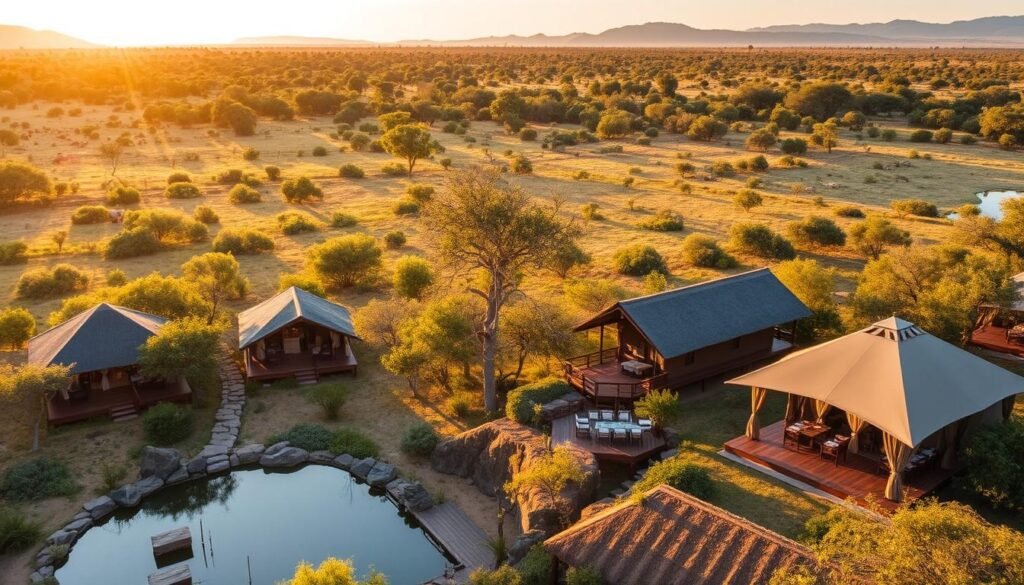
Safari accommodation ranges from simple permanent tents to suites with private pools. Decide which comforts matter after a day outdoors. Check whether rooms have solid walls or canvas, private bathrooms, hot water, fans, air conditioning, heating, mosquito protection and reliable electricity.
Open accommodation can provide a strong sense of place, but sounds and insects are part of the setting. Ask whether animals move through the grounds and how guests are escorted after dark. Families should confirm room configuration, barriers, supervision expectations and whether children can share safely.
Do not rely on the word “luxury”. Look for recent images of the exact room category, a plan of the property and a written list of facilities. If connectivity matters, ask where Wi-Fi or mobile reception works and whether service is limited.
Check accessibility and health needs
Accessibility varies greatly. Request specific measurements and surfaces rather than accepting a general assurance. Ask about steps, path gradients, distances, vehicle access, bathroom layout and emergency arrangements. Explain mobility, sensory or dietary needs early enough for the lodge to respond accurately.
Discuss personal health requirements with an appropriate medical professional before travel. Destination, season and itinerary can affect recommended preparation. Ensure travel insurance is suitable for the locations and activities planned, and understand how medical assistance or evacuation would be arranged.
Calculate the total cost
Safari pricing can be difficult to compare because inclusions differ. One rate may cover meals, standard drinks, park charges, transfers and activities, while another excludes several of those items. Ask for an itemised quotation in writing.
- Accommodation and meal plan
- Shared or private wildlife activities
- Park, reserve and conservation fees
- Road or air transfers
- Drinks, laundry and communication
- Single-room or family supplements
- Taxes, gratuities and payment fees
- Cancellation and amendment terms
Consider the value of time as well as money. A cheaper lodge that requires lengthy daily transfers may provide less time in the landscape. Never transfer funds until you have verified the business, booking terms and payment details through trusted channels.
Examine sustainability claims
Terms such as “eco-lodge” can mean different things. Ask for specific practices: energy and water management, waste handling, local employment, sourcing, land stewardship and how conservation or community contributions are governed. A single reusable bottle does not demonstrate the overall impact of a property.
Community projects should be described with clarity and dignity. Look for evidence of local leadership, long-term benefit and transparent funding rather than activities designed mainly as visitor entertainment. Treat sustainability as a set of verifiable actions, not an aesthetic.
Read reviews with context
Reviews can reveal patterns in guiding, maintenance, food and service, but one traveller’s ideal may be another’s inconvenience. Check dates, room types and season. Repeated comments matter more than an isolated complaint, and management responses can show how problems are handled.
Ask the lodge directly about any concern that would affect your trip. A clear, specific reply is more useful than a generic promise.
Questions to ask before booking
- Where does wildlife viewing take place, and how long are transfers?
- How many guests normally share a vehicle?
- Which activities and fees are included?
- What are the room, power and connectivity arrangements?
- How are dietary and accessibility needs managed?
- What happens if weather disrupts a transfer?
- What deposit, cancellation and refund terms apply?
- Which sustainability claims can the lodge explain with evidence?
Frequently asked questions
How many nights should I stay at a safari lodge?
It depends on transfer time, budget and priorities. A longer stay can provide more opportunities under changing conditions, while a short stay may work if access is simple. Wildlife sightings remain unpredictable.
Is an all-inclusive rate always better?
No. It is easier to compare only after identifying every inclusion and exclusion. Choose the rate that matches the activities and services you will actually use.
Can a safari lodge guarantee particular animals?
Ethical wildlife viewing cannot guarantee a sighting. Ask about habitat and seasonal patterns, but be cautious of promises involving wild animals.
When should I book?
Availability varies by destination and season. Book early when dates, room configuration or accessibility needs are inflexible, but review cancellation terms before paying.
Make the final decision
Create a shortlist and compare it against the same written criteria: location, guiding, accommodation, access, inclusions and policies. The right lodge is not necessarily the most expensive or photographed. It is the one that communicates clearly, handles wildlife responsibly and matches the way you want to travel.