
Updated: 27 July 2026 · Reviewed for clarity and usefulness
On this page
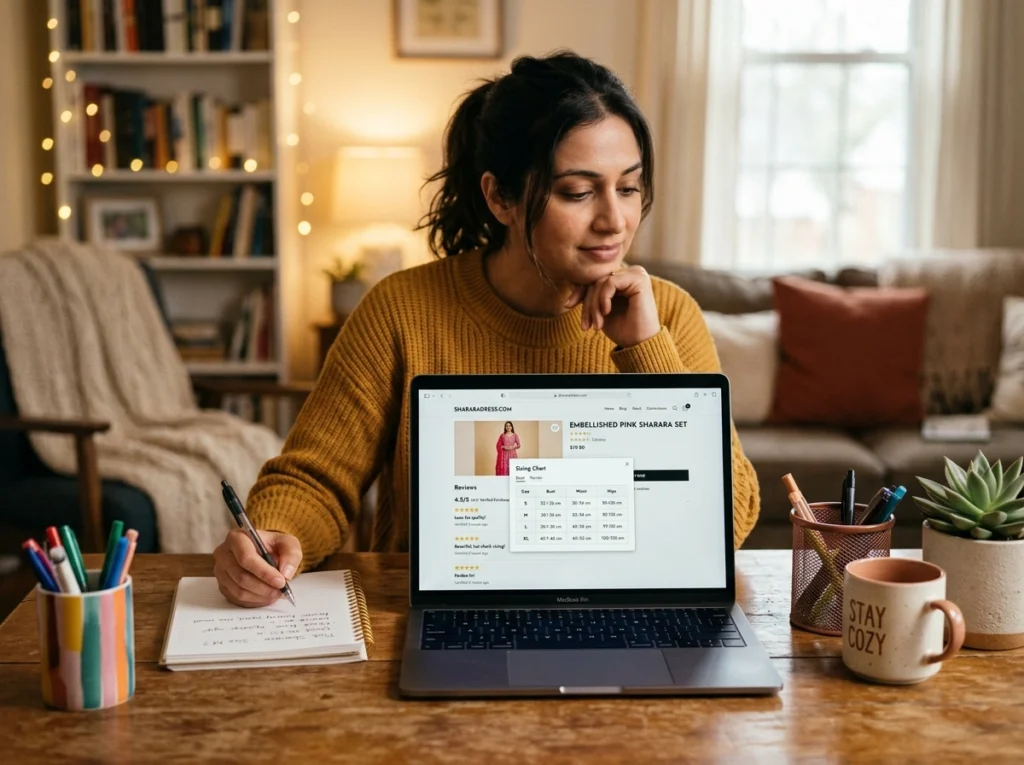
Buying clothing online should feel exciting, not stressful. Yet many shoppers hit the same wall: the dress looked perfect on screen, but the fit missed the mark when it arrived. The good news? You can avoid most of these problems before you click “buy.” With a few smart habits, you can read reviews like a pro, decode sizing charts with confidence, and order pieces that fit your body and your style.
This guide walks you through everything you need to shop wisely. You’ll learn how to interpret customer feedback, measure yourself correctly, dodge the most common sizing slip-ups, and make purchasing decisions you won’t second-guess. Whether you’re hunting for a festive sharara, a wedding outfit, or an everyday piece, these strategies will save you time, money, and return shipping headaches.
Why Smart Online Shopping Matters
Online shopping in the United States keeps growing, and so does the number of choices in front of you. That’s a win for variety, but it also means more room for guesswork. A garment’s photo only tells part of the story. Fabric drape, true color, and real-world fit often differ from what a single image shows.
Returns also cost you something beyond money. They eat up your time, delay your event plans, and create packaging waste. When you shop with a clear method, you cut down on returns and end up with pieces you genuinely love. Think of smart shopping as a small investment up front that pays off every time a package lands at your door.
How to Read Customer Reviews the Right Way
Reviews are your closest substitute for trying something on in a store. But not all reviews carry equal weight. Knowing how to filter the signal from the noise makes a big difference.
Look Beyond the Star Rating
A five-star average looks reassuring, but the number alone tells you little. Dig into the written comments. A four-star item with detailed, honest feedback often beats a five-star product with three vague reviews. Read what people actually say about fit, fabric, stitching, and color accuracy.
Focus on Reviews From Shoppers Like You
When a reviewer mentions their height, weight, or usual size, pay attention. If someone shares that they’re 5’6″ and ordered a medium that fit perfectly, you have a real reference point. These body-specific notes are gold, especially for outfits with structured cuts or layered designs.
Watch for Patterns, Not One-Offs
One person might complain about a loose waist while ten others praise the fit. A single negative comment could reflect personal preference or a one-time error. But if several reviewers say the same thing—”runs small,” “longer than expected,” “color is darker in person”—treat that as a reliable trend.
Check Photos From Real Buyers
Customer-uploaded photos show you how a garment looks on everyday bodies, not just on models. These images reveal true color, fit, and how the fabric falls. If a product page features buyer photos, scan them before deciding. They often answer questions a description never covers.
Understanding Sizing Charts Without the Guesswork
Sizing charts intimidate a lot of shoppers, but they’re actually your best friend. The trick is learning to read them in relation to your own measurements rather than relying on the size you “usually” wear.
Measure Yourself First
Sizes vary wildly between brands, so your measurements matter more than a label. Grab a soft measuring tape and record these key numbers:
- Bust: around the fullest part of your chest
- Waist: around the narrowest part of your torso
- Hips: around the widest part of your hips
- Length: for dresses and shararas, from shoulder to hem if you have a target length in mind
Write these down and keep them handy. Once you know your numbers, sizing charts stop being a mystery.
Match Your Measurements to the Chart
When you visit a product page at an online clothing retailer, compare your measurements directly to the listed dimensions. Don’t assume a “medium” is the same everywhere. If your bust matches a large but your waist matches a medium, lean toward the size that fits your largest measurement, since taking a garment in is easier than letting it out.
Pay Attention to Fit Descriptions
Words like “relaxed,” “fitted,” “flowy,” or “true to size” carry useful clues. A fitted bodice leaves little wiggle room, so accuracy counts. A flowy silhouette gives you more flexibility. Read these notes alongside the chart to picture how the piece will actually sit on you.
Consider Fabric and Stretch
Fabric changes everything. A garment with stretch forgives small measurement gaps, while a structured, non-stretch fabric demands a precise match. If a description mentions stretch material, you have a little breathing room. If it doesn’t, measure twice and choose carefully.
Common Sizing Mistakes and How to Avoid Them
Even experienced shoppers fall into a few familiar traps. Here’s how to steer clear.
Assuming Your Size Is Universal
The most common error is ordering your “usual” size without checking the chart. Brands cut their clothing differently, and a size 8 from one shop can fit like a 10 elsewhere. Always verify against the chart, every single time.
Ignoring the Length
For shararas, gowns, and maxi styles, length matters as much as width. A stunning outfit that pools on the floor or stops too short can ruin the look. Check the garment length against your height and the footwear you plan to wear.
Skipping the Care and Fabric Details
Some fabrics shrink, while others stretch after a few wears. Reading the care instructions and fabric content helps you predict how the piece will behave over time. This small step protects your purchase for the long run.
Rushing the Checkout
Excitement is real, but slowing down pays off. Take five extra minutes to compare your measurements, scan recent reviews, and confirm the return policy. That short pause prevents most disappointments.
Making Confident Purchasing Decisions
Once you’ve gathered the right information, the final decision becomes much easier. Here’s a simple framework to seal the deal.
Use an If/Then Approach
- If the reviews confirm the item runs true to size, order your charted size.
- If multiple reviewers say it runs small, size up.
- If you’re between sizes and the fabric has no stretch, choose the larger option.
- If you still feel unsure, check the return policy before buying so you have a safety net.
Review the Return and Exchange Policy
Even with careful planning, fit isn’t always guaranteed. A clear, fair return or exchange policy gives you peace of mind. Know your window for returns and any conditions before you complete your order.
Save Your Measurements for Next Time
Once you find your perfect fit, record the size and details. The next time you shop, you’ll move faster and with more confidence. Building this personal reference turns every future purchase into a smoother experience.
Bringing It All Together
Shopping online doesn’t have to be a gamble. When you read reviews with a critical eye, measure yourself accurately, and match your numbers to the sizing chart, you take control of the outcome. Add in a quick scan of fabric details and the return policy, and you’ll order pieces that fit beautifully the first time.
Your next step is simple: grab a measuring tape, jot down your numbers, and put these habits to work on your next purchase. With a clear method behind every order, you’ll spend less time returning items and more time enjoying outfits that look and feel exactly right.
For more trending stories and in-depth guides, visit Prothots.