
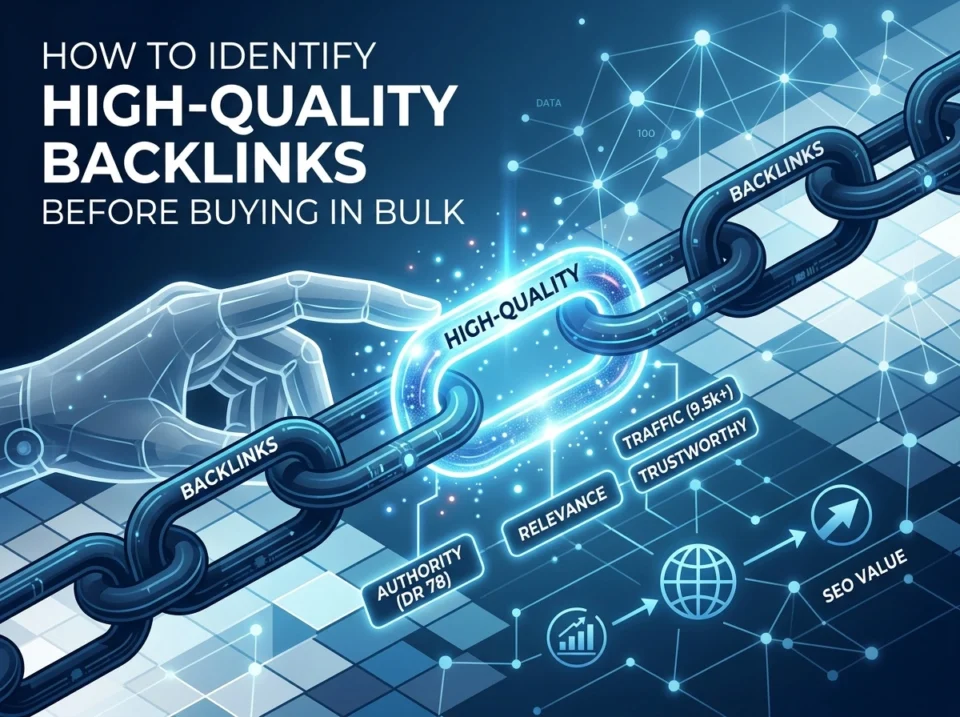
Search engine optimization relies heavily on the strength and credibility of your website’s backlink profile. Search engines view links from external websites as votes of confidence. When reputable sites link to your content, algorithms interpret this as a signal that your web pages offer valuable, authoritative information. Consequently, your rankings in search engine results pages improve, driving more organic traffic to your business.
Scaling an SEO strategy often requires acquiring these links at a faster pace than natural, passive link building allows. Many website owners and digital marketing agencies turn to bulk link acquisition to accelerate their growth. Procuring links at scale saves significant time that would otherwise be spent on manual outreach, negotiation, and content creation.
However, not all links provide equal value. Search algorithms have grown exceptionally sophisticated, easily distinguishing between genuine endorsements and manipulated link schemes. Acquiring a large volume of low-quality links can severely damage your website’s visibility, potentially leading to manual actions or algorithmic penalties. Therefore, learning how to distinguish between beneficial and harmful links is a critical skill for any SEO professional.
Before committing your marketing budget to large-scale link acquisition, you must understand the criteria that define link quality. This guide provides a comprehensive framework for evaluating potential link placements, ensuring your investment yields sustainable, long-term organic growth.
Understanding the Risks and Rewards of Buying in Bulk
Acquiring links at volume presents a unique set of advantages and potential pitfalls. Approaching this strategy with a clear understanding of both sides allows you to maximize returns while protecting your domain’s reputation.
The primary reward of securing links at scale is accelerated growth. Building an outreach infrastructure internally requires hiring specialists, purchasing software subscriptions, and spending months refining email templates. Reputable link building services already possess this infrastructure. They offer predictable, scalable results, allowing you to secure placements on high-quality domains within a set timeframe. This predictability makes it easier to forecast SEO performance and align your marketing efforts with broader business objectives.
Conversely, the risks associated with bulk acquisition are significant if you choose the wrong provider. Many low-end services rely on Private Blog Networks (PBNs) or link farms to deliver on their promises. These networks consist of websites created solely for the purpose of selling links. Search engines actively penalize websites that participate in these schemes. A sudden influx of links from toxic domains can result in a complete loss of organic traffic. Recovering from such penalties is a difficult and resource-intensive process.
Key Metrics to Evaluate Backlink Quality
Evaluating link opportunities requires looking beyond surface-level promises. You need concrete data to assess the true value of a potential placement. Several key metrics help paint a clear picture of a website’s health and authority.
Organic traffic serves as one of the most reliable indicators of a website’s quality. If a site receives consistent, meaningful traffic from search engines, it indicates that algorithms trust its content. Tools like Ahrefs, Semrush, or Moz can estimate a domain’s monthly organic visitors. A site with zero or rapidly declining traffic often signals a penalized domain or an abandoned project, making it a poor candidate for a backlink.
Another crucial metric is the Spam Score, developed by Moz. This percentage represents the likelihood that a domain employs manipulative SEO practices. While a low Spam Score does not guarantee a high-quality site, a high Spam Score should immediately prompt further investigation. Websites with a high concentration of toxic inbound links or thin content typically exhibit higher Spam Scores.
You should also examine the Trust Flow and Citation Flow metrics provided by Majestic. Trust Flow measures the quality of a site’s inbound links, while Citation Flow measures the quantity. A healthy website maintains a balanced ratio between these two metrics. A site with a high Citation Flow but a low Trust Flow likely possesses a large volume of spammy links.
Assessing Domain Authority and Relevance
While metrics provide a baseline, understanding authority and relevance is essential for determining a link’s true impact. Search engines prioritize links from websites that demonstrate expertise and topical alignment with your own content.
Understanding Domain Metrics
Domain Rating (DR) and Domain Authority (DA) are third-party metrics used to estimate a website’s overall ranking strength. These scores, ranging from 1 to 100, are calculated based on the size and quality of a domain’s backlink profile. Placements on sites with a high DR or DA generally pass more equity to your website.
When evaluating bulk packages, pay close attention to the promised authority ranges. Reputable services offer clear expectations, such as placements on domains with a DR between 40 and 90. However, authority alone is not enough. A link from a high-authority site that lacks relevance to your industry provides less value than a link from a moderately authoritative, highly relevant site.
The Importance of Topical Relevance
Niche relevance dictates how search engines contextualize a backlink. If you operate a financial software company, a link from an established accounting blog carries significant weight. It signals to search engines that recognized authorities within the financial sector validate your software.
Conversely, a link from a culinary blog to your financial software site appears unnatural. Even if the culinary blog boasts a high Domain Rating, the lack of topical alignment diminishes the link’s effectiveness and may trigger algorithmic scrutiny. High-quality bulk campaigns prioritize niche-specific relevance, ensuring that your links originate from domains topically aligned with your industry.
Checking the Quality of Link Profiles
A website is only as strong as the links pointing to it. Before accepting a backlink from a specific domain, you must analyze its own inbound and outbound link profiles.
First, examine the site’s inbound links. Are top-tier publications and respected industry blogs linking to the site? Or is the backlink profile dominated by low-quality directories, foreign language spam, and unrelated domains? A healthy link profile features a diverse, natural accumulation of links from credible sources.
Next, scrutinize the website’s outbound linking practices. Legitimate websites link to external resources to cite data, provide further reading, or reference relevant tools. They do not link indiscriminately. If a website publishes articles packed with exact-match anchor text pointing to gambling, pharmaceuticals, and payday loan sites, it is likely a compromised domain or a link farm. Search engines devalue links originating from these neighborhoods.
Identifying Red Flags in Bulk Backlink Packages
The SEO industry features numerous service providers, ranging from elite agencies to unscrupulous operators. Recognizing the warning signs of low-quality bulk packages protects your website from harmful link building tactics.
One major red flag is guaranteed placement volume at unsustainably low prices. If a service promises 10,000 backlinks for a few hundred dollars, they are utilizing automated software to generate forum profiles, blog comments, or web 2.0 properties. These links are completely useless for improving rankings and often result in algorithmic penalties.
Another warning sign is a lack of transparency regarding the placement process. Quality providers explain their outreach methodologies. They emphasize manual prospecting, customized email outreach, and the creation of valuable content to secure contextual placements. Providers who refuse to explain how they acquire links are likely leveraging private networks or exploiting compromised websites.
Additionally, be wary of services that guarantee instant ranking improvements. SEO is a long-term strategy. While high-quality links certainly move the needle for commercial keywords, natural indexing and algorithmic adjustments take time. Providers promising overnight dominance are setting unrealistic expectations and likely employing high-risk tactics.
How to Vet Potential Link Sources
Even when outsourcing your link acquisition, understanding how to manually vet a potential source ensures you receive the value you expect. A quick visual inspection often reveals information that third-party metrics might miss.
Visit the website and review its editorial standards. Does the content read naturally, or does it appear generated by low-quality AI tools with no human editing? Articles should provide genuine value to the reader, featuring proper formatting, original insights, and relevant images. Sites publishing hundreds of generic, poorly written articles every week are typically content farms designed exclusively for link selling.
Check for excessive monetization. While most websites utilize display ads or affiliate links to generate revenue, an overwhelming ratio of ads to content degrades the user experience. Search engines favor websites that prioritize user experience. Sites cluttered with pop-ups, intrusive banners, and auto-playing videos are generally viewed as low quality.
Finally, look for signs of genuine engagement. Do articles receive comments from real users? Does the site maintain active, legitimate social media profiles? Authentic websites build communities around their content. A complete lack of engagement on a supposedly high-traffic site suggests manipulated metrics.
Strategies for Safely Scaling Your Link Building
Scaling your link acquisition requires a strategic, methodical approach to avoid triggering algorithmic filters. Velocity and diversity are the cornerstones of a safe, effective bulk link building campaign.
Link velocity refers to the speed at which your website acquires new backlinks. A sudden, massive spike in inbound links to a relatively new or previously stagnant domain appears highly unnatural. Search engines may temporarily devalue these links or flag the domain for review. When you begin a bulk campaign, start with smaller packages and gradually increase the volume over several months. This steady accumulation mimics the natural growth trajectory of a popular website.
Diversity is equally critical. A natural backlink profile consists of various link types, including editorial links, directory mentions, forum discussions, and social media signals. Furthermore, your anchor text distribution must remain diverse. Over-optimizing your links with exact-match commercial keywords is a fast track to a penalty. Ensure your link profile includes branded anchors, naked URLs, and long-tail variations.
To achieve this safely and effectively, you must partner with providers who understand these nuances. When you are ready to scale your organic traffic and Buy Bulk Backlinks, prioritize agencies that utilize 100% white-hat techniques, secure contextual placements on real websites, and offer transparent reporting.
Making Informed Decisions When Scaling Your SEO
Investing in bulk link acquisition holds the potential to dramatically accelerate your organic growth. By bypassing the tedious aspects of manual outreach, you can focus your resources on product development, content creation, and broader marketing strategies.
However, success depends entirely on your ability to discern quality. Relying on superficial metrics or falling for unrealistic promises jeopardizes your website’s search engine visibility. By thoroughly evaluating domain authority, scrutinizing link profiles, and identifying the hallmarks of manipulative tactics, you safeguard your SEO investment.
Approach your link building efforts with a commitment to quality and relevance. Partner with transparent providers who prioritize genuine outreach and contextual placements. By maintaining a diverse, natural backlink profile, you build a resilient SEO foundation capable of driving sustainable, long-term traffic to your business.
