
Search engine algorithms have undergone immense transformations over the past few years, prioritizing user experience and authoritative content above all else. By 2026, the artificial intelligence driving these search engines has become remarkably adept at distinguishing between natural, high-quality citations and manipulative link-building schemes. For businesses looking to scale their digital presence, adapting to these sophisticated algorithms is an absolute necessity.
Backlinks remain a fundamental ranking factor, serving as digital votes of confidence from one website to another. However, the days of acquiring hundreds of low-quality links to artificially inflate search rankings are completely obsolete. Search engines now demand strict contextual relevance, verifiable authority, and organic integration. This shift has elevated the importance of editorial links—citations placed naturally within high-quality content by webmasters and editors.
Navigating this landscape requires a meticulous approach. While acquiring these placements can dramatically accelerate your organic growth, a poorly executed strategy can lead to severe ranking penalties. Understanding the precise rules of modern link building is essential for safeguarding your domain while maximizing your return on investment. Here is exactly how to approach editorial link acquisition in 2026.
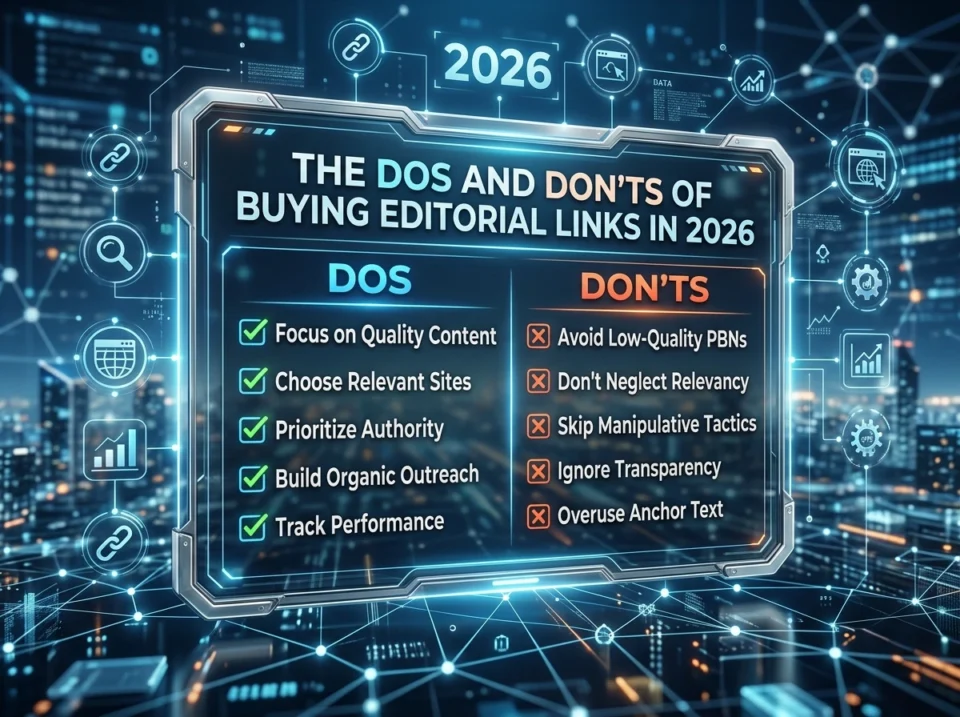
The Dos of Buying Editorial Links
Successfully securing high-tier links requires a commitment to quality and relevance. When executed correctly, these placements signal authority and trust to search engines.
Focus on Contextual Relevance
Search algorithms now analyze the thematic consistency between the linking site, the surrounding content, and your target page. A link from a high-authority finance blog to a fitness supplement website carries little weight and may even trigger spam filters. Always prioritize publications that operate within your specific industry or an immediately adjacent niche. The content housing your link should naturally lead the reader to your website as a valuable resource or citation.
Verify Organic Traffic Metrics
A high Domain Rating (DR) or Domain Authority (DA) is an excellent starting point, but it is no longer the sole indicator of a website’s health. You must verify that the referring publication receives steady, verifiable organic traffic from search engines. A site with a high DR but zero organic traffic is often a penalized domain or a dormant site. Tools like Ahrefs or Semrush can help you confirm that the host website maintains a healthy, active audience.
Demand Permanent Placements
Temporary links provide no compounding value and can cause your search visibility to fluctuate wildly. Ensure that any agreement for editorial placements guarantees that the link will remain live indefinitely. Permanent links build long-term authority, helping your website outrank competitors for highly competitive commercial keywords over time.
Integrate Links into Data-Driven Content
The most powerful backlinks are those embedded within high-quality, informative content. Search engines favor articles that provide genuine value to readers. To get the best results when you buy editorial links, ensure they are placed within well-researched, data-driven articles. Content that features expert insights, statistics, and comprehensive analysis will always perform better than thin, keyword-stuffed guest posts.
The Don’ts of Buying Editorial Links
Avoiding common pitfalls is just as important as following best practices. A single misstep in 2026 can trigger algorithmic penalties that take months to recover from.
Never Use Private Blog Networks (PBNs)
Private Blog Networks are networks of interconnected websites created solely to manipulate search engine rankings. Search algorithms are incredibly efficient at identifying the digital footprints of PBNs, including shared IP addresses, identical hosting providers, and duplicated site architectures. Securing links from these networks is a massive risk that will inevitably lead to a manual action or algorithmic demotion. Stick exclusively to genuine, independent publications.
Do Not Ignore Anchor Text Distribution
Over-optimizing your anchor text is a clear signal of manipulation. If every incoming link uses the exact same commercial keyword (e.g., “best accounting software”), search engines will flag the activity as unnatural. Maintain a healthy, diverse anchor text profile that includes branded terms, naked URLs, and natural, conversational phrases. Exact-match keywords should be used sparingly and only when they fit perfectly into the flow of the sentence.
Avoid Sudden Spikes in Link Velocity
Search engines monitor the rate at which your website acquires new backlinks, known as link velocity. A sudden, massive influx of links pointing to a relatively new or low-traffic domain appears highly suspicious. Instead of aiming for rapid volume, focus on a steady, consistent acquisition of high-quality links. A natural growth trajectory demonstrates to search engines that your website is earning authority organically.
Don’t Settle for “Write for Us” Farms
Websites that openly advertise “Write for Us” pages or clearly sell guest posts to anyone willing to pay have significantly diminished SEO value. These sites often publish low-quality content across dozens of unrelated categories, diluting their outbound link equity. Look for exclusive publications that maintain strict editorial standards and carefully curate the content they publish.
Choosing the Right Partners for Quality Backlinks
Building a robust backlink profile is a resource-intensive process. Many organizations choose to partner with specialized agencies to manage their outreach and placement strategies. Selecting the right partner is crucial for ensuring the safety and effectiveness of your campaign.
Look for providers that offer complete transparency regarding their process and placement criteria. A reputable partner will conduct a comprehensive audit of your current backlink profile, target keywords, and competitive landscape before initiating outreach. They should employ expert SEO strategists who manually pitch high-quality content to editors at relevant, authoritative publications.
Furthermore, demand minimum guarantees regarding Domain Rating and organic traffic. The best agencies will never compromise on quality, ensuring that every link is placed naturally within contextual articles on sites with real, verified monthly search traffic. They should also provide detailed reporting on how these placements are impacting your overall keyword rankings and revenue.
Maintaining a Sustainable Link Profile
Earning top positions in search engine results requires a disciplined, white-hat approach to digital PR and content marketing. The rules of SEO in 2026 demand authenticity, strict contextual alignment, and a commitment to user experience.
By prioritizing high-authority publications and avoiding manipulative tactics, you can build a digital footprint that withstands algorithmic updates and drives highly qualified referral traffic to your site. Take the time to audit your current link-building strategies, adjust your anchor text ratios, and align your outreach efforts with the highest editorial standards in your industry.
